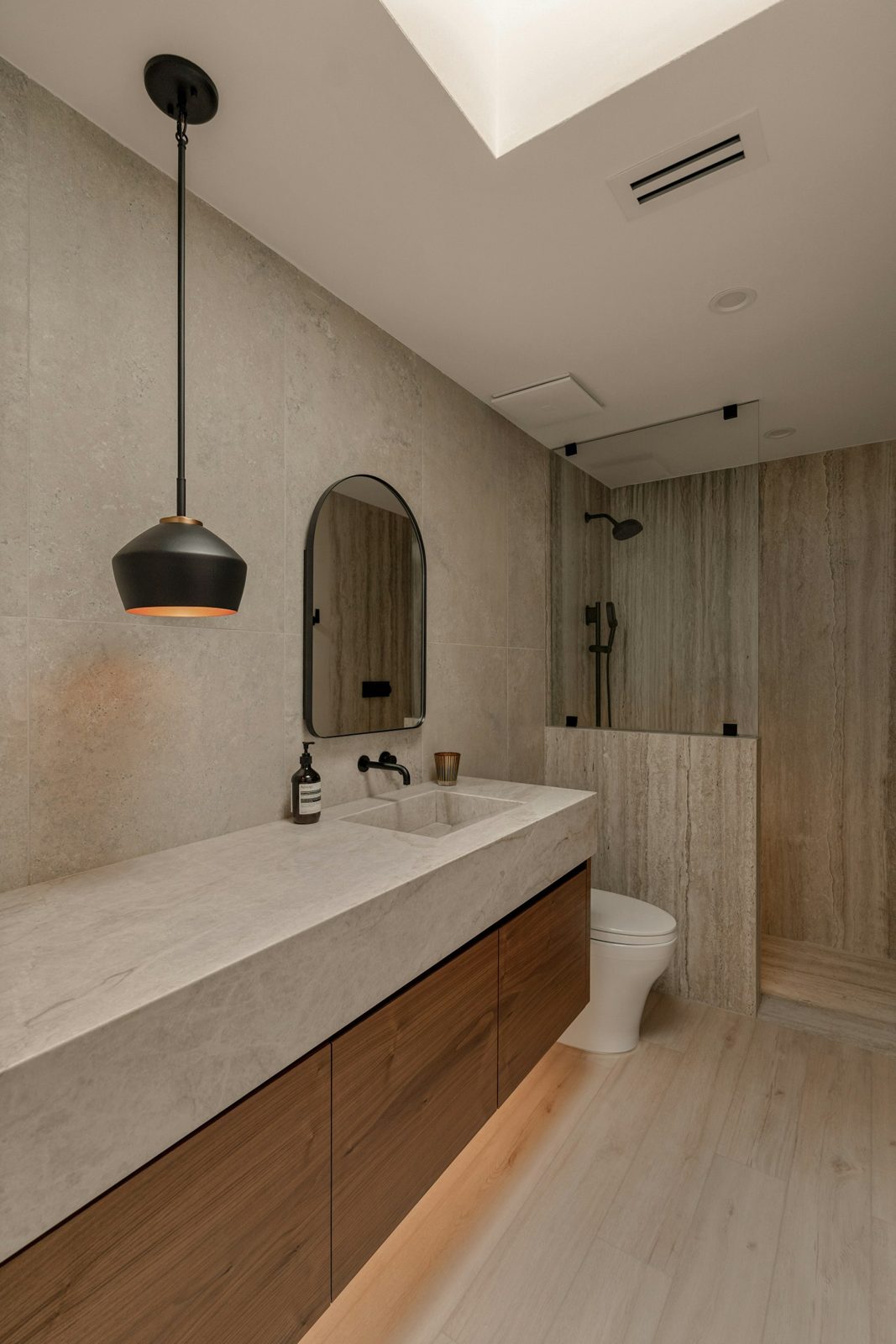
A complete rebuild, planned properly
A bathroom renovation is more than new tiles and a new vanity. Done properly, it means taking the room back to its frame or slab, fixing whatever the years have done to the structure, renewing the plumbing and electrical services, building a new waterproofing system to AS 3740 and then finishing the room so it looks good and works the way your household lives. That is the kind of renovation we deliver for homes in Morwell, Traralgon, Churchill, Moe and the surrounding towns.
We are a design-led bathroom renovation business. That means the conversation starts with how you use the room, not with a catalogue. Who uses the bathroom and when? Is the bath ever used, or would a larger shower suit you better? Where do towels, toiletries and cleaning products end up? Is the room cold in winter, or does the mirror fog for half an hour after every shower? The answers shape the layout, the fixtures and the finishes, and they are the reason two renovations in the same street can end up looking completely different.
Every project is carried out by licensed and insured trades, coordinated by one team, with a written scope agreed before work begins.
Signs it is time to renovate
Some bathrooms simply look dated. Others are telling you something is wrong. Common signs that a full renovation is the right answer include:
- Cracked or drummy tiles, particularly on the floor or around the shower, which can indicate movement or water beneath.
- Grout that keeps going black no matter how often it is cleaned, a sign of ongoing moisture.
- Swelling skirting boards, door frames or vanity bases near the bathroom.
- A musty smell that does not go away with cleaning.
- Damp patches or bubbling paint on walls outside the bathroom or on the ceiling below.
- Low water pressure or rattling pipes, which may point to old galvanised supply lines.
- A layout that no longer suits you, such as a shower over a bath that is hard to step into.
If several of these apply, patching is rarely good value. A complete renovation deals with the cause rather than the symptoms.
Our renovation process
1. Design consultation
We visit your home, measure the room and look closely at the structure, plumbing, ventilation and access. We talk about how the room is used, what you like and dislike about it and what you want it to feel like when it is finished. If you have photographs or ideas saved, bring them along.
2. Written scope and layout
After the visit we prepare a written scope that describes the work in plain English: what will be removed, what will be repaired, where fixtures will go, how the room will be waterproofed and which products are included. Where the layout is changing, we provide a drawing so you can see the new arrangement.
3. Selections
We help you choose tiles, tapware, the vanity, the toilet, the shower screen, lighting and accessories. We can recommend suppliers in the Latrobe Valley and bring samples so you can see them in your own home.
4. Strip-out
The old bathroom is removed with care. Floors and hallways are protected and dust screens are put up. Any suspect material in older homes is tested, and if asbestos is confirmed it is removed by licensed removalists before we continue.
5. Structural repairs
With the room open, we inspect the framing, floor and wall plates. Rotten or damaged timber is replaced, floors are stiffened where needed and walls are straightened so tiles sit flat.
6. Plumbing and electrical rough-in
New water supply and drainage are installed to suit the layout. Electrical work includes lighting, power for heated towel rails or mirrors, exhaust fans and in-floor heating where chosen.
7. Linings and waterproofing
Wet-area linings are fixed, and the room is waterproofed to AS 3740 with bond breakers, puddle flanges and sealed penetrations. Every stage is photographed.
8. Tiling
Floors and walls are tiled with attention to set-out, falls and movement joints. Niches, shelves and feature walls are built in at this stage.
9. Fit-off
Vanity, toilet, tapware, screen, mirror, accessories and lighting are installed and tested.
10. Handover
We walk you through the finished room, explain how to care for it and hand over photographs, certificates and warranties.
What a full renovation includes
A typical complete bathroom renovation includes:
- Removal and disposal of the existing bathroom.
- Repairs to framing, floors and wall plates.
- New water supply and drainage to suit the layout.
- New electrical work, including lighting and ventilation.
- Wet-area linings and AS 3740 waterproofing.
- Floor and wall tiling.
- Supply and installation of vanity, toilet, tapware, screen and accessories, as agreed.
- A final clean and handover pack.
Layout changes
Changing a layout is often the single most effective way to improve a bathroom. Swapping the bath for a large walk-in shower, moving the toilet out of sight of the door, or combining a bathroom with a separate toilet can transform how a room feels. In homes on timber floors, which are common in Morwell, moving drainage is usually straightforward. On concrete slabs, it requires cutting and re-pouring sections of the slab, which we plan carefully.
Renovating older Latrobe Valley homes
Many homes in Morwell, Moe, Churchill and Traralgon were built in the post-war decades. Their bathrooms share some common traits:
- Timber floors on stumps, which can sag or rot near the shower and toilet.
- Fibre-cement linings that may contain asbestos.
- Galvanised steel pipes that corrode and restrict flow.
- No mechanical ventilation, leading to mould on ceilings.
- Small rooms with a bath, a basin and sometimes a toilet squeezed in.
We plan for these issues from the start, so there are fewer surprises during the job.
Newer homes
Homes built since the 1990s usually have better bones, but builder-grade bathrooms often show their age early. Shower screens leak, grout cracks, fans vent into the roof space and storage is limited. We can update these rooms with improved waterproofing, ventilation, storage and finishes.
Waterproofing to AS 3740
Waterproofing is the most important part of any bathroom, even though it ends up hidden. We waterproof every wet area to AS 3740, with careful preparation, bond breakers at junctions, a puddle flange at every floor waste and sealed penetrations. The membrane cures fully before tiling. Each stage is photographed, and you receive the photographs and compliance documentation at handover.
Ventilation and heating
The Latrobe Valley has cool, damp winters, and bathrooms that cannot dry out grow mould. We specify an exhaust fan ducted to the outside, sized to the room and placed close to the shower, often with a run-on timer. Heated towel rails, in-floor heating and ceiling heaters keep the room comfortable and help surfaces dry.
Lighting
Good lighting makes a bathroom easier and safer to use. We combine general ceiling lighting with task lighting at the mirror, and sometimes a low-level night light so the room can be used at night without full brightness.
Storage
Storage is one of the most common complaints about older bathrooms. We look at wall-hung vanities with drawers, mirrored shaving cabinets, recessed niches in the shower, tall cabinets and shelves above the toilet. Every bit of space is considered.
Accessibility and future needs
Even if nobody in the house needs support now, a renovation is the ideal time to plan ahead. Step-free showers, blocking for grab rails, lever taps and slip-resistant floors make a bathroom easier for everyone and help households stay in their home for longer.
Living at home during the work
Most of our clients live at home while we renovate. We protect floors, contain dust, agree working hours and keep the site tidy. If yours is the only bathroom, we talk through how to keep a toilet working for as long as possible and how to manage the period when the room is out of action.
How long does a renovation take?
The time depends on the size of the room, the amount of structural repair needed, product lead times and curing times for the membrane and adhesives. We give you a realistic timeline in your written scope and keep you informed as the job progresses.
Choosing the right products
We are not tied to any supplier, so we recommend products based on how they will perform in your home. For example, on tank water we look at shower heads that work well on lower pressure. In damp rooms, we choose vanity materials that resist swelling. For busy family bathrooms, we suggest durable tiles and grouts that are easy to clean.
What you receive at handover
- Photographs of every stage of waterproofing and any hidden repairs.
- Compliance certificates for plumbing, electrical and waterproofing.
- Product warranties and care instructions.
- A walk-through of the finished room.
Common questions
Do I need to move out during the renovation?
Usually not. Most households stay at home. If the house has only one bathroom, we discuss options before work starts.
Can you work with products I have already bought?
Often yes. We check that they suit the room and will perform well before installing them.
What if you find damage behind the tiles?
We show you what we have found, explain the options and agree any changes in writing before continuing.
Do you handle everything, including electrical work?
Yes. We coordinate licensed plumbers, electricians, waterproofers, tilers and carpenters, so you deal with one team.
Do you renovate ensuites and laundries too?
Yes. We renovate bathrooms, ensuites, laundries, powder rooms and separate toilets, and many clients do two or more rooms together.
Where we work
We are based in Morwell and renovate bathrooms throughout the central Latrobe Valley, including Traralgon, Churchill, Moe, Newborough, Hazelwood North, Boolarra, Yinnar, Tyers, Glengarry, Hazelwood South, Jeeralang Junction, Yallourn North and Toongabbie.
Styles we build
We do not have a house style. Some clients want a calm, pale room with large-format tiles and minimal detail; others want colour, pattern or texture. Popular directions in the Latrobe Valley include:
- Warm minimal, with soft greys, timber-look vanities and brushed tapware.
- Classic, with subway or square tiles, a framed mirror and chrome fittings.
- Coastal-inspired, with light colours, textured tiles and natural materials.
- Bold, with deep coloured vanities, patterned floors or a feature wall.
- Period-sympathetic, for older homes, with tiles and tapware that suit the age of the house.
Whatever the style, the room is built with the same care underneath.
Shower options
The shower is the most used part of most bathrooms, so we spend time getting it right. Choices include:
- Step-free showers with a linear drain, which make the room feel larger and are easier to use.
- Fixed glass panels instead of a full enclosure, where the layout allows water to stay contained.
- Framed or semi-frameless screens, which can suit busy family bathrooms.
- Recessed niches for bottles, placed so they are easy to reach and do not sit in the direct spray.
- Rail showers and hand showers, which are practical for washing children, pets or for seated showering.
- Ceiling or wall-mounted rain heads, chosen with your water pressure in mind.
Bath or no bath?
Many households ask whether they need a bath. If you have young children or enjoy a soak, a bath is worth keeping. If it is rarely used, removing it can free up space for a much larger shower. Some families keep a bath in the main bathroom and have a shower-only ensuite. We talk through the options at the consultation, including freestanding, built-in and inset baths and how each one affects cleaning and space.
Tiles and grout
Tiles set the tone of the room and need to suit how it will be used. For floors, we recommend porcelain tiles with a slip resistance rating appropriate for wet areas. For walls, there is more freedom with size, finish and colour. Grout choice matters too: lighter grout shows marks, darker grout hides them, and epoxy grout resists staining in busy showers. We explain the pros and cons so you can decide with confidence.
Vanities and benchtops
A vanity needs to suit the room, the household and the climate. Wall-hung vanities make floors easier to clean and the room feel larger. Floor-standing vanities offer more storage. In damp bathrooms, we recommend moisture-resistant materials and quality hardware. Benchtops in stone, solid surface or ceramic each have different looks and care requirements.
Toilets
Modern toilets are quieter, use less water and are easier to clean than older models. Wall-faced pans hide the connection, concealed cisterns save space and comfort-height pans are easier for many people to use. We help you choose a toilet that suits the room and your needs.
Fitting around your plans
Some clients want their bathroom finished before a family event, a holiday or the arrival of a baby. Tell us about any dates that matter at the consultation, and we will tell you honestly whether they are achievable. We order products early so the job is not held up waiting for deliveries.
Renovating before selling or renting
A well-built bathroom can make a home more appealing to buyers and tenants. If you are renovating before a sale or a new tenancy, we focus on durable, neutral finishes and solid workmanship that will stand up to inspection. We provide the same waterproofing documentation, which can give buyers and property managers confidence.
Renovating more than one room
Many households renovate the bathroom, ensuite and laundry together, or one after the other. Combining rooms can save time and keep finishes consistent. If you would like to stage the work, we can plan the order so the house always has a working bathroom.
Caring for your new bathroom
A new bathroom needs very little to stay in good condition, but a few habits help. Run the exhaust fan during every shower and for a while afterwards. Squeegee glass and tiles after showering, particularly if you are on hard or tank water. Use mild, pH-neutral cleaners rather than harsh acids or abrasives, which can damage grout, sealants and tapware finishes. Check silicone joints once a year and have them replaced if they split or discolour, because silicone is a maintenance item rather than a permanent seal. If you notice a crack, a loose tile or water where it should not be, get in touch early; small issues are easy to fix before they grow.
A final check before handover
Before handover we test every tap, waste and fan, check the screen door closes and seals, run water across the floor to confirm the falls and inspect grout and silicone joints.
Book a design consultation
If your bathroom is tired, leaking or simply no longer works for you, book a design consultation. We will visit your home, look at the room and the structure behind it, talk through your ideas and prepare a clear written scope.
Areas we service
- Boolarra
- Churchill
- Glengarry
- Hazelwood North
- Hazelwood South
- Jeeralang Junction
- Moe
- Morwell
- Newborough
- Toongabbie
- Traralgon
- Tyers
- Yallourn North
- Yinnar
Book a design consultation
Tell us about your bathroom, ensuite or laundry and we will visit to measure, talk through ideas and prepare a clear written scope.
Book a design consultation