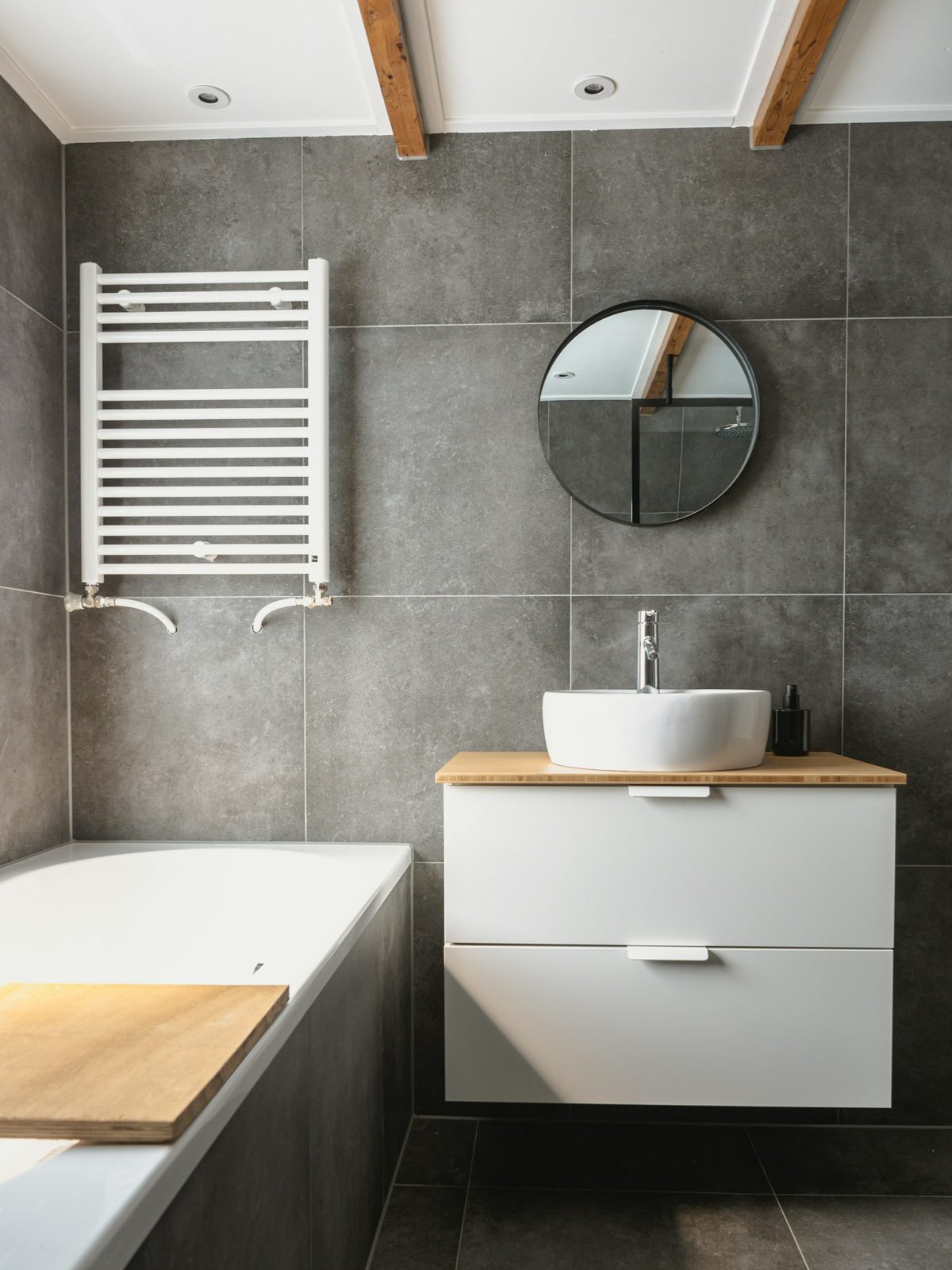
Warmth in a Latrobe Valley bathroom
Winter in Morwell is cool, damp and often foggy, with frosty mornings in Tyers, Glengarry and the hills towards Boolarra and Jeeralang Junction. In many homes the bathroom is the coldest room in the house. It sits on the south side, has hard surfaces that feel icy underfoot, and is often closed off from the heating in the living areas. Stepping out of a hot shower onto cold tiles is one of the least pleasant parts of a Valley winter.
Heating does more than make the room comfortable. A warm bathroom dries out faster after a shower, which reduces condensation, mould on ceilings and grout, peeling paint and swollen cabinetry. Heating and ventilation work together to keep a bathroom healthy.
This guide explains the main ways to heat a bathroom, how they compare and what to plan during a renovation.
In-floor heating
In-floor heating, sometimes called underfloor or under-tile heating, warms the floor itself. Thin electric heating cables or mats are laid on the prepared floor, covered in tile adhesive, and tiled over. A thermostat on the wall controls the temperature.
How it feels
In-floor heating gives gentle, even warmth. The tiles feel warm underfoot, and the heat rises slowly through the room. It does not blow air or make noise. Many clients tell us it is the feature they appreciate most in their new bathroom.
Where it goes
Heating is laid across the open floor areas of the bathroom, usually not under fixed cabinetry or the toilet. It can run into a walk-in shower, which helps the shower floor dry quickly, though the installation must suit wet areas and the manufacturer’s requirements.
Controls
Modern thermostats can be programmed to warm the floor before you wake up and switch off when the bathroom is not in use. A floor sensor keeps the tiles at a comfortable temperature.
Planning
In-floor heating must be installed during the renovation, after the waterproofing and before tiling. It needs a dedicated circuit, planned with the electrician. The heating mat is tested before and after tiling to check it has not been damaged.
Floors that suit
In-floor heating suits both timber floors over joists and concrete slabs. On a slab, an insulation layer under the heating mat improves the response, because otherwise much of the heat flows into the concrete. On timber floors, the substrate must be stiff and suited to tiling.
Heated towel rails
A heated towel rail warms and dries towels, and gives off gentle heat into the room. It is one of the most popular additions to a bathroom renovation.
Types
- Ladder rails: the most common style, with several horizontal bars.
- Single or double bar rails: slimmer options for small rooms.
- Hardwired rails: connected to a power circuit inside the wall, with no visible cord.
- Plug-in rails: connected to a power point, simpler to install but with a visible cord.
We recommend hardwired rails in a renovation, with the wiring concealed in the wall and controlled by a switch or timer.
Placement
Place the towel rail where it is easy to reach from the shower, but outside the zone where water sprays directly. It should not be placed where a door will hit it. In small bathrooms, the rail can sit beside the vanity or on the back of the door wall.
Finish
Towel rails come in chrome, brushed nickel, matte black, brushed brass and other finishes. Choose one that matches the tapware and accessories.
Timers
A timer switch lets the rail run for a set period, such as two hours in the morning and two in the evening, so towels are warm and dry when you need them without the rail running all day.
Ceiling heaters
Ceiling heaters warm the room from above.
Heat lamps
Traditional heat lamps, often combined with an exhaust fan and light in a single unit, warm people quickly. They are bright and can be harsh to look at, and they warm people rather than the room.
Fan heaters
Ceiling fan heaters blow warm air into the room and warm it quickly. They can be noisy.
Panel heaters
Ceiling or wall-mounted panel heaters give gentle, radiant warmth without glare.
Ceiling heaters suit rooms where in-floor heating is not practical, or as an addition to it for very cold mornings.
Wall heaters
Wall-mounted heaters, rated for bathroom use and installed in a safe location, can provide quick warmth. They take up wall space, so they suit larger bathrooms better than small ones.
Comparing the options
- In-floor heating: gentle, even warmth, invisible, warms the floor and helps it dry. Must be installed during a renovation.
- Heated towel rail: warm, dry towels and some background warmth. Easy to add.
- Ceiling heat lamp: quick warmth for people, combined with a fan and light. Glare.
- Panel heater: gentle radiant warmth, no glare.
Many bathrooms use a combination: in-floor heating for comfort and drying, a towel rail for towels, and a good exhaust fan for moisture.
Heating and mould
Mould grows where moisture sits on cool surfaces. In a cold bathroom, steam from a shower condenses on the ceiling, walls, mirror and window, and takes hours to dry. A warm room keeps surfaces above the dew point, so less moisture condenses, and what does condense evaporates and is removed by the exhaust fan. Heating combined with good ventilation is the best defence against mould in Latrobe Valley bathrooms.
Running heating sensibly
- Use timers and thermostats so heaters only run when needed.
- Close the bathroom door while heating, and open it once the room has dried.
- Insulate the ceiling above the bathroom and, where walls are opened during the renovation, the external walls.
- Seal draughts around windows and doors.
- Use the exhaust fan during and after showers, even in winter, to remove moisture.
Insulation during a renovation
A bathroom renovation is a good opportunity to insulate. With walls stripped to the frame, insulation batts can be installed in external walls. The ceiling insulation above the bathroom can be checked and topped up. In homes on stumps, insulation can be added under the floor. In older Morwell homes, many of which had little or no insulation when built, these steps make a noticeable difference to comfort.
Electrical requirements
All heating in a bathroom must be installed by a licensed electrician, with suitable circuits, protection and switching, and fittings rated for their location. In-floor heating and hardwired towel rails need to be planned before the walls are lined. We coordinate this as part of the renovation.
Heating in post-war Morwell homes
Post-war homes in Morwell, Moe and Newborough usually sit on stumps, with timber floors over an open subfloor. Cold air circulates beneath, and in winter the bathroom floor can feel freezing. Many of these homes were built with little or no insulation. When renovating, we often recommend:
- Underfloor insulation beneath the bathroom.
- In-floor heating under the new tiles.
- A heated towel rail.
- A ducted exhaust fan.
Together, these make a dramatic difference to comfort.
Heating in brick veneer homes on slabs
In newer homes on slabs, the floor is cold but not draughty. In-floor heating with an insulation layer over the slab works well. A heated towel rail and ceiling heater add comfort.
Heating in rural homes
Rural homes around Boolarra, Yinnar, Jeeralang Junction and Glengarry can be especially cold, with frosts through winter. Heating is important, and households on tank water may want to consider how much hot water is used. Heated towel rails and in-floor heating draw power rather than water, so they warm the room without affecting tank supplies.
Heating ensuites
Ensuites benefit from heating as much as main bathrooms. In-floor heating on a timer warms the floor before the alarm goes off. A towel rail keeps towels dry between uses.
Heating laundries
In laundries, a heated drying rail or a heated towel rail helps dry small items, and in-floor heating keeps the floor dry and warm, which suits laundries used as back entries.
Heating and accessibility
For older people, a warm bathroom reduces the risk of chills after showering and makes the room more comfortable for longer, seated showers. Heat lamps should be positioned so they do not cause burns.
Heating and children
Young children lose heat quickly after a bath. A warm room makes bath time more comfortable and helps children dry off without getting cold. Heated towel rails should be positioned so children cannot hold onto hot bars for long; most rails run at a safe surface temperature.
Combining heating with ventilation
It may seem odd to run an exhaust fan while heating a room, but both are needed. The fan removes moisture-laden air; the heating keeps surfaces warm so moisture does not condense. Using both, for a short time after each shower, leaves the bathroom dry.
Choosing thermostats and timers
Programmable thermostats and timers make heating convenient. Set in-floor heating to come on before you wake and switch off after the morning rush. Set the towel rail to run in the morning and evening.
Can in-floor heating be added to an existing floor?
It is installed under the tiles, so it is best added during a renovation.
Can heated towel rails dry towels completely?
They dry towels between uses, especially with good ventilation.
Does in-floor heating heat the whole room?
It warms the floor and gently warms the room. In very cold rooms, it can be combined with another heater.
Is in-floor heating safe in a wet area?
Systems designed for bathrooms, installed correctly by a licensed electrician, are suitable for wet areas.
How long does in-floor heating take to warm up?
It depends on the system and the floor; on an insulated substrate it warms in a fairly short time.
Heated bathrooms across the district
We install in-floor heating and heated towel rails in bathrooms throughout Morwell, Traralgon, Churchill, Moe and the colder rural towns around them.
Planning the controls
Heating controls should sit just outside the bathroom or near the door, at a comfortable height. A programmable timer lets the floor and rail warm up before you wake, then switch off.
Towel rails in laundries
A heated towel rail in the laundry is handy for drying small items, tea towels and sports gear during damp valley winters.
Book a design consultation
If you would like a warmer bathroom in Morwell, Traralgon, Churchill or a nearby town, book a design consultation. We will discuss heating, insulation and ventilation together, so your bathroom is comfortable and dries out quickly through the Valley winter.
Our bathroom services
- Accessible Bathrooms
- Bathroom Design
- Bathroom Renovations
- Bathroom Tiling
- Ensuite Renovations
- Laundry Renovations
- Leaking Shower Repairs
- Powder Room Renovations
- Shower Conversions
- Small Bathroom Renovations
- Vanity and Storage
- Waterproofing
Book a design consultation
Tell us about your bathroom, ensuite or laundry and we will visit to measure, talk through ideas and prepare a clear written scope.
Book a design consultation