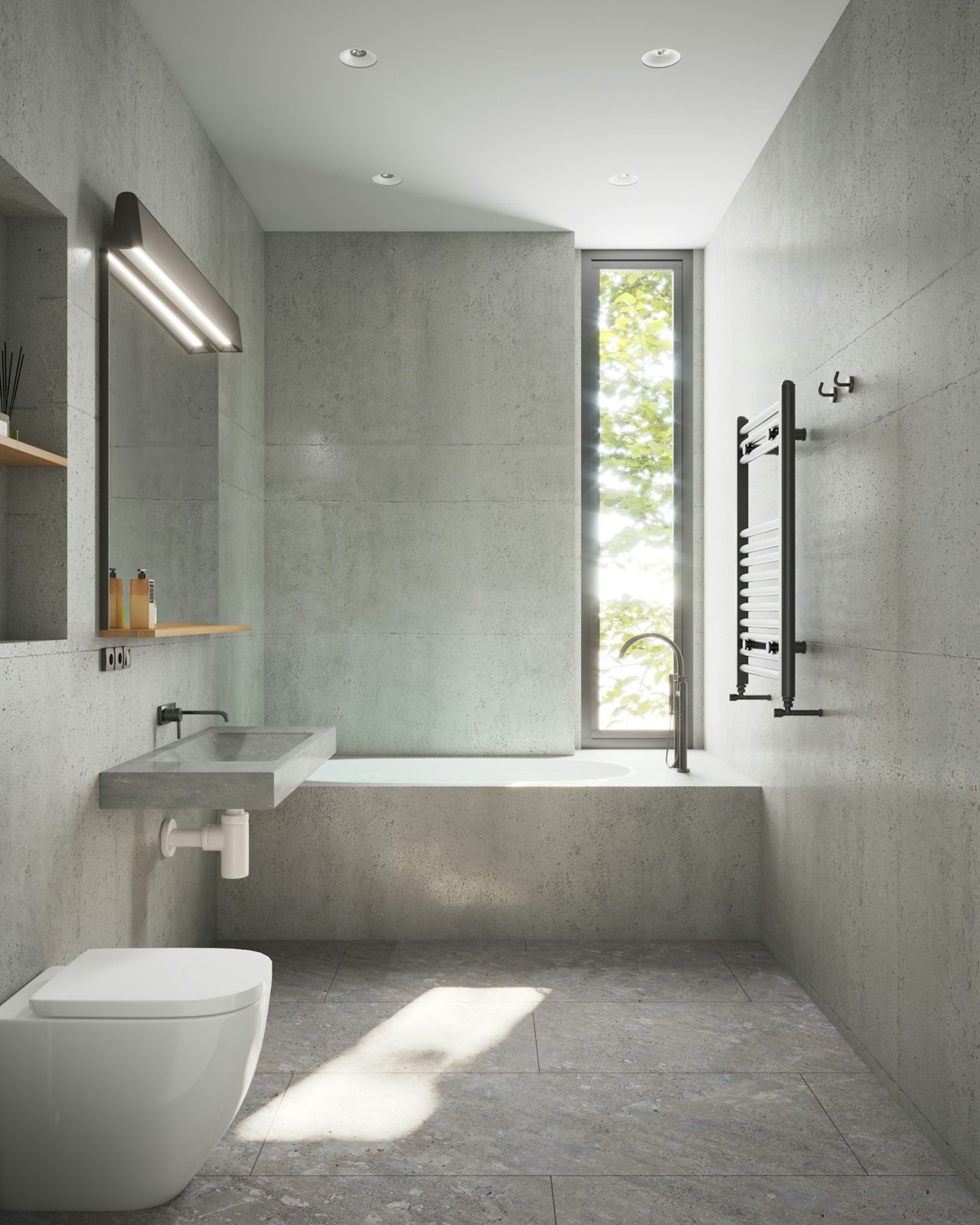
The screen shapes the room
The shower screen is one of the largest elements in a bathroom. It decides how open the room feels, how much water stays in the shower and how much time you spend cleaning. An old framed screen with yellowed seals and clouded glass can make an otherwise tidy bathroom look tired. A clear, well-chosen screen lets light flow through the room and shows off the tiles behind it.
This guide explains the main types of shower screens and how to choose one for your bathroom.
Framed screens
Framed screens have an aluminium frame around every glass panel and door. They were standard in bathrooms for decades and are still found in many Morwell, Moe and Churchill homes.
- They use thinner glass, supported by the frame.
- They are good at containing water, because the frame and seals close tightly.
- The frame and its tracks collect soap scum and mould and are harder to clean.
- They suit rental properties and showers where walls are out of plumb.
Semi-frameless screens
Semi-frameless screens have a frame around the edges where the glass meets the walls and floor, but no frame around the door. They balance durability and appearance, look more modern than a framed screen and contain water well.
Frameless screens
Frameless screens use thick toughened glass panels fixed with minimal hardware: wall brackets, hinges, clamps and sometimes a support bar. They give the cleanest look, make the room feel bigger and are easy to clean, with few places for grime to gather.
Frameless glass relies on accurate installation. The walls and floor must be straight and level, and the waterproofing and tiling must be finished to a high standard. Small gaps between panels and at the edges mean slightly more water can escape than with a framed screen, so the shower layout and falls must allow for this.
Fixed panels
A single fixed panel, with no door, is common in walk-in showers. It is simple, easy to clean and has no moving parts. It works best in longer showers, where the opening is well away from the shower head.
Hinged doors
Hinged doors swing open, usually outward. They suit showers of moderate size and contain water well. Make sure the door can open fully without hitting the vanity, toilet or towel rail.
Sliding doors
Sliding doors move along a track or rail. They save space where a hinged door cannot swing, and suit shower-over-bath arrangements and narrow bathrooms. Tracks need regular cleaning.
Bath screens
A fixed or hinged glass panel on a bath stops water splashing onto the floor when using a shower over the bath. It is a clean alternative to a shower curtain.
Glass
Shower screens must use toughened safety glass. Clear glass shows off tiles and lets light through. Frosted, patterned or tinted glass gives privacy and hides water marks. Low-iron glass has less of the green tint seen in the edges of standard glass.
Glass coatings
A protective coating makes water bead and run off, reducing soap scum and water spots. Many screens come with a coating applied in the factory, and some can be treated after installation.
Hardware finishes
Hinges, brackets, clamps, handles and support bars should match the tapware: chrome, brushed nickel, matte black, brushed brass or other finishes.
Height
Most screens run to around two metres. Taller screens, running to the ceiling, keep more steam inside the shower, which can help in a cold bathroom, but they must allow ventilation.
Seals
Seals along the edges of doors and panels help contain water. Over time they wear and may need replacing.
Installation and timing
Screens are measured after tiling, because the final dimensions depend on the tiled walls and floor. Frameless glass is made to measure, so there is a short wait between measuring and installation. In the meantime, the shower may be usable with care, or with a temporary curtain.
Care
- Squeegee the glass after each shower.
- Wipe hardware with a soft cloth.
- Use pH-neutral cleaners rather than abrasive cleaners, which damage coatings.
- Check hinges and seals periodically.
Screens for different shower layouts
Corner showers
A corner shower has two tiled walls and two glass sides, meeting at a corner. Options include a fixed panel with a hinged door, a pivot door, or a curved or angled front.
Alcove showers
An alcove shower has three tiled walls and an open front. A single hinged door, a door with a fixed panel, or a sliding door closes the front.
Walk-in showers
A walk-in shower usually has a fixed panel only, with an open end. In longer showers, a fixed panel with a short return panel controls splash.
Shower over bath
A fixed or hinged bath screen on the bath edge replaces a shower curtain.
Screens in post-war bathrooms
In many post-war Morwell bathrooms, the shower sits over a bath with a curtain, or in a small alcove with a framed screen. When converting a bath to a walk-in shower, a frameless fixed panel is usually the best choice, letting light flow through the small room and making it feel larger.
Screens in rental properties
Landlords often prefer semi-frameless screens, which are durable and contain water well. A glass coating reduces cleaning and helps the screen stay clear between tenants.
Accessibility
A walk-in shower with a fixed panel, or a shower with an outward-opening door, makes access easier for people with reduced mobility and for carers. Avoid tracks on the floor, which can be a trip hazard.
Privacy
In ensuites and family bathrooms where privacy matters, frosted or patterned glass, or a frosted band across the middle of clear glass, provides privacy without losing light.
Screen safety
Shower screen glass must be toughened safety glass, installed with suitable fixings. Hardware should be checked from time to time to make sure hinges and clamps remain tight.
Common problems with old screens
- Seals that have perished and let water out.
- Frames corroded or discoloured.
- Glass clouded by hard water or soap scum.
- Doors that drop or stick.
- Tracks blocked with grime.
Replacing an old screen can refresh a bathroom, but if the shower itself is leaking, the screen will not solve the problem. We check the shower before recommending a screen replacement.
How long does a new screen take?
After tiling, the screen is measured and made to order, then installed.
Can a frameless screen be fitted to an old shower?
Sometimes, if the walls and floor are straight and the shower is watertight. Often, a rebuild gives a better result.
Do I need a door?
In a large walk-in shower, often not. In smaller showers, a door helps contain water.
How do I stop water escaping?
Correct falls, a well-positioned panel, a door or return, and the shower head aimed away from the opening.
Which glass coatings work best?
Factory-applied coatings are generally more durable than those applied later.
Shower screens across the district
We supply and install shower screens as part of renovations throughout Morwell, Traralgon, Churchill, Moe and nearby towns, choosing the screen to suit each shower.
Measuring and ordering
Because frameless glass is cut and toughened to size, it cannot be altered once made. Our glazier measures after the tiles are laid and grouted, checking walls for plumb and the floor for level. Small variations are accommodated in the hardware or by tapering the glass. This is why we never order frameless glass before tiling.
Hardware choices
Wall channels
A slim channel fixed to the wall holds the glass panel. Channels are easier to adjust and suit walls that are slightly out of plumb.
Clamps and brackets
Individual clamps hold the glass with minimal hardware for the cleanest look, but need accurate tiling.
Support bars
A bar from the top of a fixed panel to the wall or ceiling braces long panels. It can be round, square or flat, in the tapware finish.
Hinges
Hinges can be wall-to-glass or glass-to-glass. Quality hinges with self-closing or lift-and-rise features keep the door aligned.
Water deflectors and seals
Clear seals along the bottom of doors and between panels help keep water in without spoiling the frameless look. A small deflector strip along the bottom of a fixed panel can stop water running out along the floor.
Floor details under screens
The screen sits on the tiled floor, and the floor falls must direct water back into the shower. In walk-in showers with a linear drain, positioning the drain under or just inside the screen line catches water before it can escape.
Cleaning routine
A daily squeegee takes thirty seconds and makes a huge difference. Weekly, wipe the glass and hardware with a pH-neutral cleaner and a soft cloth. Avoid abrasive pads and harsh chemicals, which can damage coatings and finishes. Rinse the bottom seals and track, if there is one, to prevent build-up.
Glass and light in small rooms
In a small bathroom, clear glass lets light reach every corner and makes the room feel larger. A frosted screen in the same room can make it feel smaller, because it blocks the view of the back wall. In most small Morwell bathrooms, clear glass is the better choice.
Choosing the right screen for your household
Think about who uses the shower, how often it is cleaned and how much water escapes now. Families may prefer a door to contain splashes from children. Couples in an ensuite may prefer a fixed panel. Rental owners may prefer semi-frameless for durability. We will recommend a screen based on your layout and your household.
Replacing a screen only
If your shower is watertight and the tiles are in good condition, replacing an old framed screen with a frameless one can refresh the room quickly.
Screens and the tile layout
The screen position should be decided before tiling, so the tile layout, niches and tapware line up neatly with it. A screen fixed across a grout line looks tidier than one that cuts through the middle of a tile.
Screen height
Most screens are about 2000 mm high, which suits standard ceiling heights. Taller screens can be made for tall household members or high ceilings, and shorter panels suit low ceilings in attic or extension bathrooms.
Book a design consultation
If you are choosing a shower screen for a bathroom in Morwell or a nearby town, book a design consultation. We will help you choose a screen that suits your shower layout, your style and the way you use the room.
Our bathroom services
- Accessible Bathrooms
- Bathroom Design
- Bathroom Renovations
- Bathroom Tiling
- Ensuite Renovations
- Laundry Renovations
- Leaking Shower Repairs
- Powder Room Renovations
- Shower Conversions
- Small Bathroom Renovations
- Vanity and Storage
- Waterproofing
Book a design consultation
Tell us about your bathroom, ensuite or laundry and we will visit to measure, talk through ideas and prepare a clear written scope.
Book a design consultation